
If you stop and think about it, you’ll realize that your data is the most essential thing on your computer and network. There’s nothing you can do without it. It’s because you have your computer and network with you that it’s so important to employ adequate security procedures for it, after all. Remember, your data is unique and can’t be replaced if it’s destroyed. You wouldn’t be able to do anything if it was lost!

The following are the top six things you can do to safeguard your data. Let’s have a look:

Back-up your data frequently

One of the most essential things you can do to safeguard your data is to make regular backups. Now, if you’re wondering how often you should back up your data, remember that the amount of information you can afford to lose if your system fails is determined by the amount of data stored in it. Take your time and think things through from start to finish. From an hour’s effort to a week’s, make sure you consider everything. What needs to be mentioned here is the fact that backing up data is really simple, whether you use the built-in Windows backup utility or a variety of other third-party applications.

Use a strong, unique password to protect your documents

This is a no-brainer, to put it mildly. You may use applications like Adobe Acrobat and Microsoft Office to encrypt individual documents. After that, you’ll need to supply the password in order for everyone else who wants access to it to do so. The password is essential for both opening the file and making modifications to it, so it plays a significant role in keeping your data safe.

Use IP security to protect data in transit

The simple fact is that anyone can capture your data using sniffer software as it makes its way over a network. For this reason, it is vital for you to use Internet Protocol Security or IPSec. Just about all Microsoft operating systems offer built-in support for the same.

Ensure using disk encryption

Ensure using disk encryption

Creating encrypted partitions is not difficult these days, thanks to the existence of several third-party tools. Encrypting your disk will make your entire content “invisible” to others, which means that even if they gain access to the disk, its data will be inaccessible.

Retain control with rights management

When you send data to someone else, you’ll worry about its safety the minute it leaves your system. To manage such a problem, it is highly suggested that you employ Windows RMS or Rights Management Services to restrict what can be done with the data. For example, by securing the right to it, you can ensure that the person receiving the file will only be able to read it, not save, change or copy it.

Share-level and file-level security should be used

To ensure that no one gets to access your data, it is vital for you to set permissions on all your folders and files. With the help of file-level and share-level security, it will be possible for you to permit and deny different access levels ranging between read-only to full control. However, its usage can play a substantial role in protecting your data.

The Internet of Things is a network of physical devices with embedded technology that allows them to communicate and interact with their external environment and internal states. Connecting these devices, we can automate many processes and optimize our lives. In this blog post, we will talk about what IoT is, and how it benefits us!

The aim of the Internet of things is to build devices that self-report in real time, enhance our efficiency and provide vital information faster than a system relying solely on intervention by humans.

IoT devices – Examples

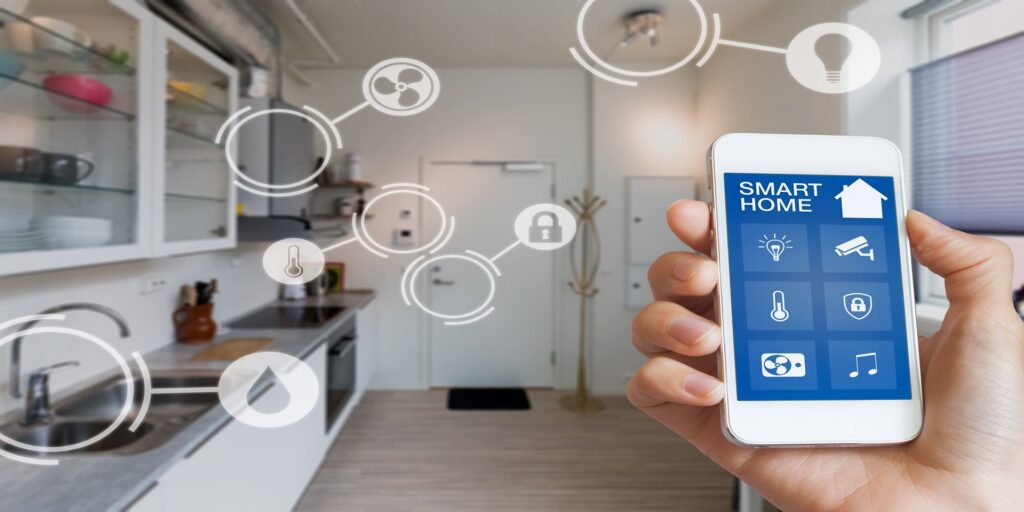
Most of us are familiar with the term “smart houses” in which all IoT devices are incorporated to make life easier for us, even though IoT may be a new concept to us. However, IoT devices go beyond those found in homes. They might be anything from a WiFi camera placed on your bookcase to keep an eye on your pets to a medical device, such as a pacemaker, implanted in your body.

How do these devices work?

In simple words, an IoT device is one that is equipped with sensors that can send data and connects to the internet. Sensors and micro-computer processors are integrated into IoT devices, which use machine learning to process the data collected by the sensors.

Smartphones are vital to the IoT as many of these devices may be operated through an app downloaded on your cellphone. For instance, if you have a smart thermostat at home, you can easily converse with it from remote locations.

What benefits does the IoT offer?

The basic purpose of the IoT is to make lives easier and simpler for humans. For instance:

  • The implementation of IoT in our homes has made it possible for us to enjoy smarter, easier and more pleasant lives. Most importantly, it goes a long way in terms of reducing environmental impact.
  • IoT enabled cars make it possible for Alexa and Siri to “converse” with us just like they would do when we are at home.
  • Ideas for food preparation can be received on your smartphone or laptop via the scales working in tandem with your treadmill, thereby allowing you to remain healthy.
  • Video surveillance, smart locks, and other state-of-the-art security systems keep an eye on your home. You can even check out your residential or commercial space while you’re gone with the help of a streaming video.